Game Boy Coding Adventure
Price:
Sale price
£39.90
Stock:
Quantity:
Login / Signup
Cart
Your cart is empty


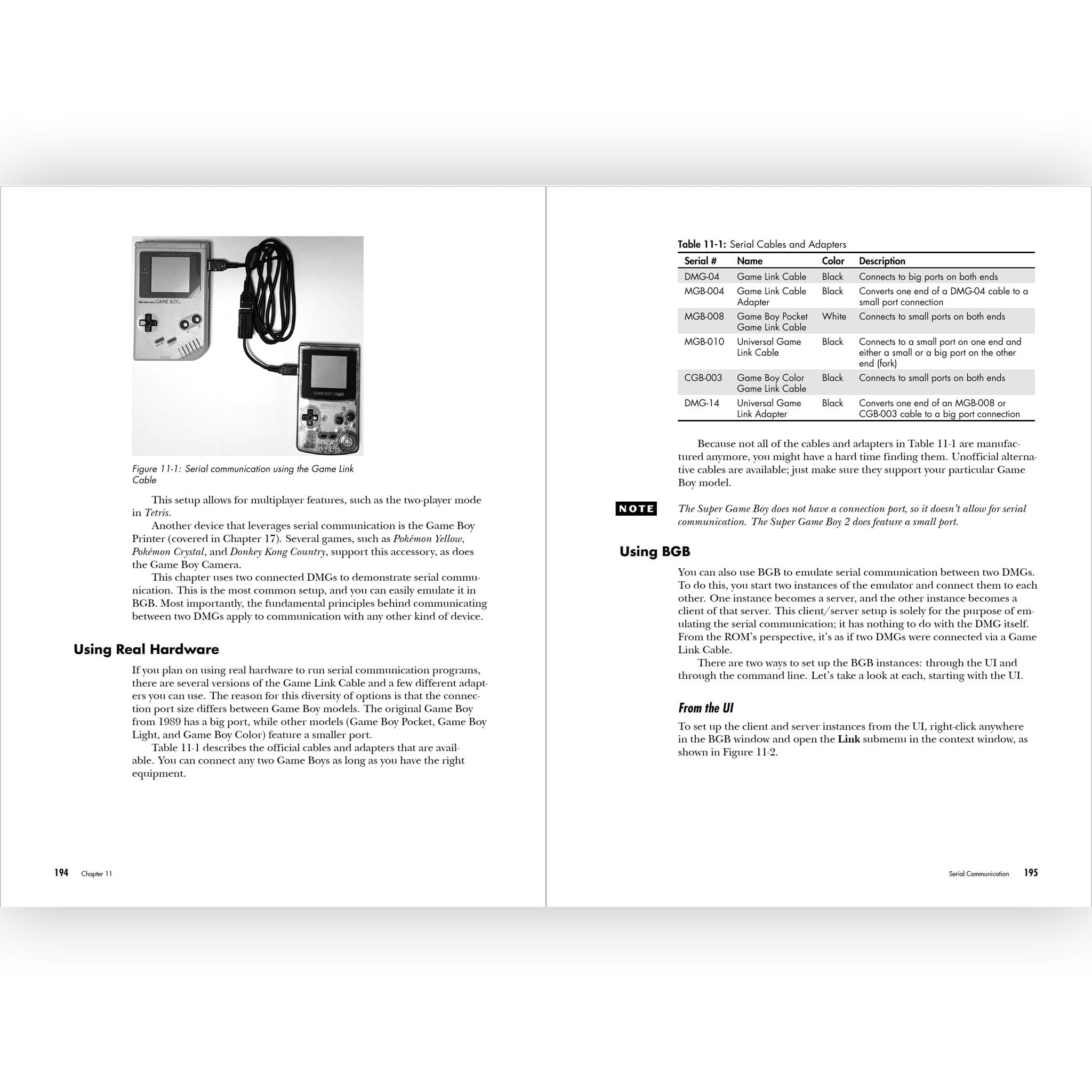
Game Boy Coding Adventure is a hands-on guide to programming one of the most iconic consoles ever built. And there is magic here: By leveraging the simplified assembly language of this retro machine, you’ll learn how to control every aspect of the Game Boy’s 8-bit hardware.
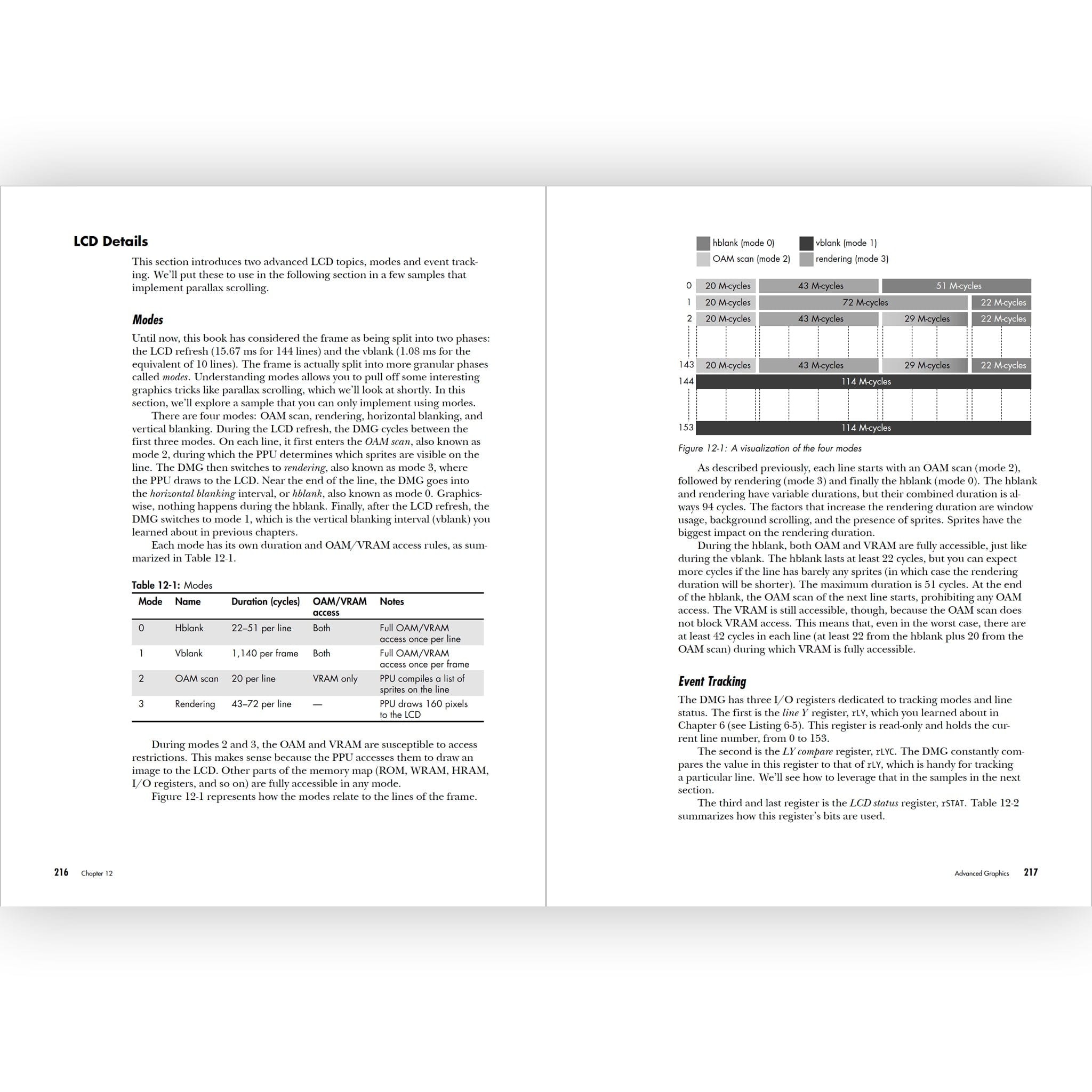
As you build tile-based graphics, sprite animations, sound effects, input handling, timers, and more, you’ll discover how hardware behaves—and how software components work together to run interactive programs. Along the way, you’ll gain a strong foundation in systems programming, mastering concepts like memory management, registers, interrupts, and I/O.
You’ll learn how to:
Written by a veteran game developer with over 15 years of experience building graphics engines and shipping titles across PC, mobile, and consoles, this book teaches more than just syntax. It takes you back to a simpler platform with a reduced instruction set that’s perfect for learning. You’ll write assembly code that runs directly on real hardware, see the results immediately, and learn how to debug, optimize, and control every cycle. You’ll also build game-ready components and develop a clear understanding of how software and hardware interact.
Why stop now? Slot in the cartridge, flip the switch, and start coding.
Maximilien Dagois has over 15 years of experience building graphics as a professional game developer. His credits include Final Fantasy XIV, Dragon Quest Builders, and Pokémon Ranger. Now an engineer at Google, he brings his passion for retro hardware and systems programming to a new generation of coders. He lives in Tokyo.
Foreword
Acknowledgments
Introduction
Part I: Getting Started
Chapter 1: Game Boy Fundamentals
Chapter 2: Assembly Language Basics
Chapter 3: The Game Boy Toolchain
Chapter 4: The Sample Assembly Code Template
Part II: Essential DMG Programming
Chapter 5: Graphics Overview
Chapter 6: Graphics Asset Management
Chapter 7: High-Level Features
Chapter 8: The Joypad
Chapter 9: Audio
Part III: Advanced Game Boy Programming
Chapter 10: The Counter and Timer
Chapter 11: Serial Communication
Chapter 12: Advanced Graphics
Chapter 13: Memory Bank Controllers
Chapter 14: Interrupts
Chapter 15: Programming and Debugging Tricks
Part IV: Beyond the Game Boy
Chapter 16: Game Boy Color
Chapter 17: Game Boy Printer
Chapter 18: Super Game Boy
Chapter 19: Going Further
Appendix A: Instructions
Appendix B: Opcodes
Index
Your payment information is processed securely. We do not store credit card details nor have access to your credit card information.