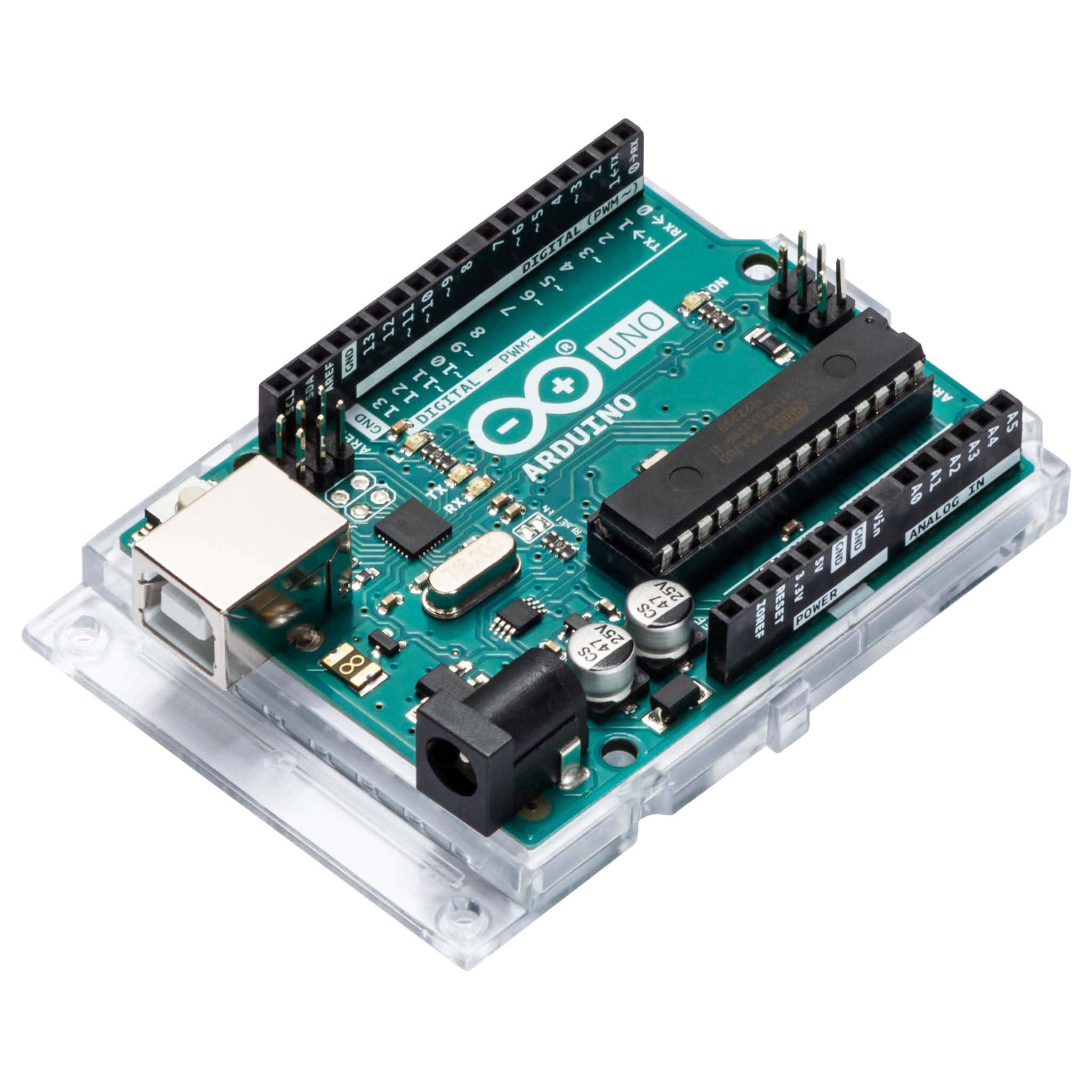
The NeoPixel RGBW Shield (Cool White) adds 40 individually addressable LEDs in a 5×8 matrix to your Arduino, delivering vivid RGB colour plus crisp white light — all controlled from a single digital pin, with chainable expansion and flexible power options.
Put on your sunglasses before stacking this onto your Arduino — this NeoPixel RGBW Shield (Cool White) packs 40 ultra-bright RGBW LEDs arranged in a 5 × 8 matrix for a powerful burst of configurable colour. Each pixel is individually addressable, and the entire matrix is controlled using just one pin (Digital #6). If you need a different pin, simply cut a trace and reroute it to nearly any other digital pin for custom setups. This is the Cool White RGBW version.
Each NeoPixel is effectively split into two halves: the familiar RGB LED, and a separate white LED with a yellow phosphor. Unlit, it resembles an egg yolk, but once powered it’s incredibly bright and supports 8-bit PWM per channel, delivering 32-bit colour per pixel (8 bits × 4 channels). This makes it ideal for combining vibrant colours with crisp white illumination in your projects.
By default, the LEDs draw power from the Arduino’s onboard 5V supply, which works well provided you’re not driving all 40 pixels at full white brightness simultaneously. For higher power demands, solder in the included terminal block (pro tip: mount it on the underside for a lower profile) and connect an external 4–6V DC supply. That external supply will power both the Arduino and the shield. If you prefer to power only the shield via the terminal block while keeping the Arduino on USB or DC jack power, cut the centre of the solder jumper located to the right of the terminal block. A polarity protection FET is built into the external input to guard against accidental reverse wiring.
If you need even more illumination, the shields are chainable. Connect the DIN of a second shield to the DOUT of the first, tie the grounds together, and provide 5V power. You can chain multiple shields, although using more than five on an Arduino UNO may push the limits of available RAM. Both stacking headers and plain headers are included — choose stacking headers if you need access to additional Arduino pins for sensors or outputs, or plain headers for a slimmer, sturdier installation.