Monochrome 2.7" 128x64 OLED Graphic Display Module Kit
Price:
Sale price
£54
Stock:
Quantity:
Login / Signup
Cart
Your cart is empty


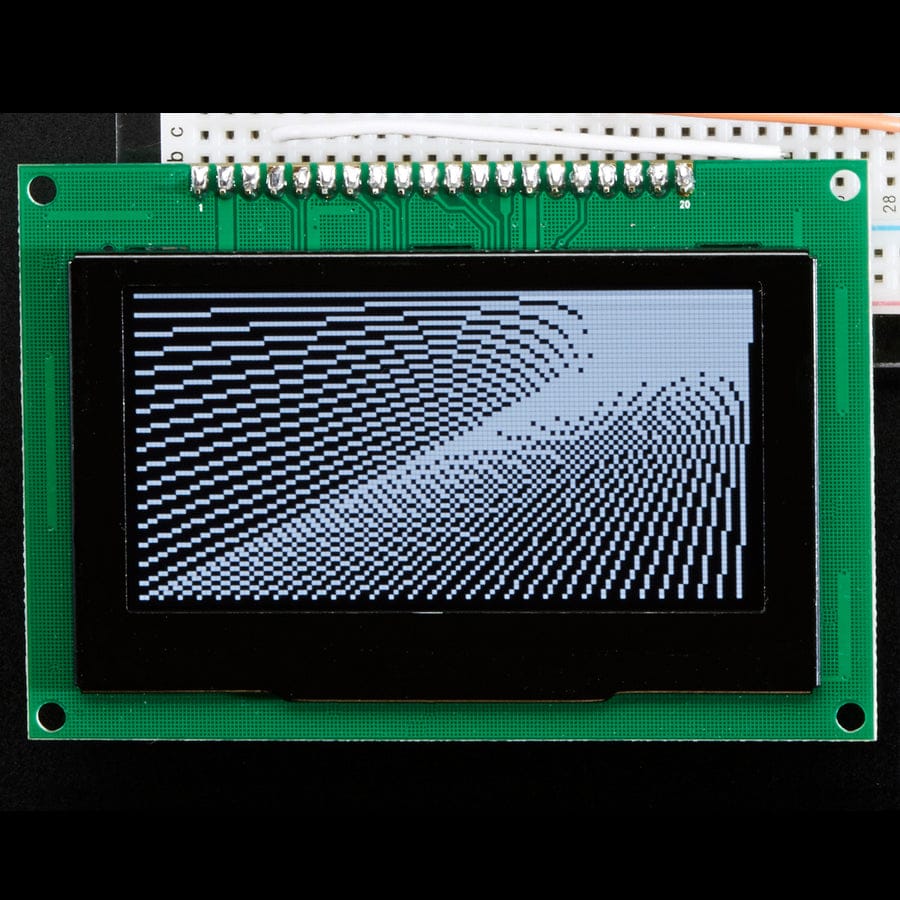
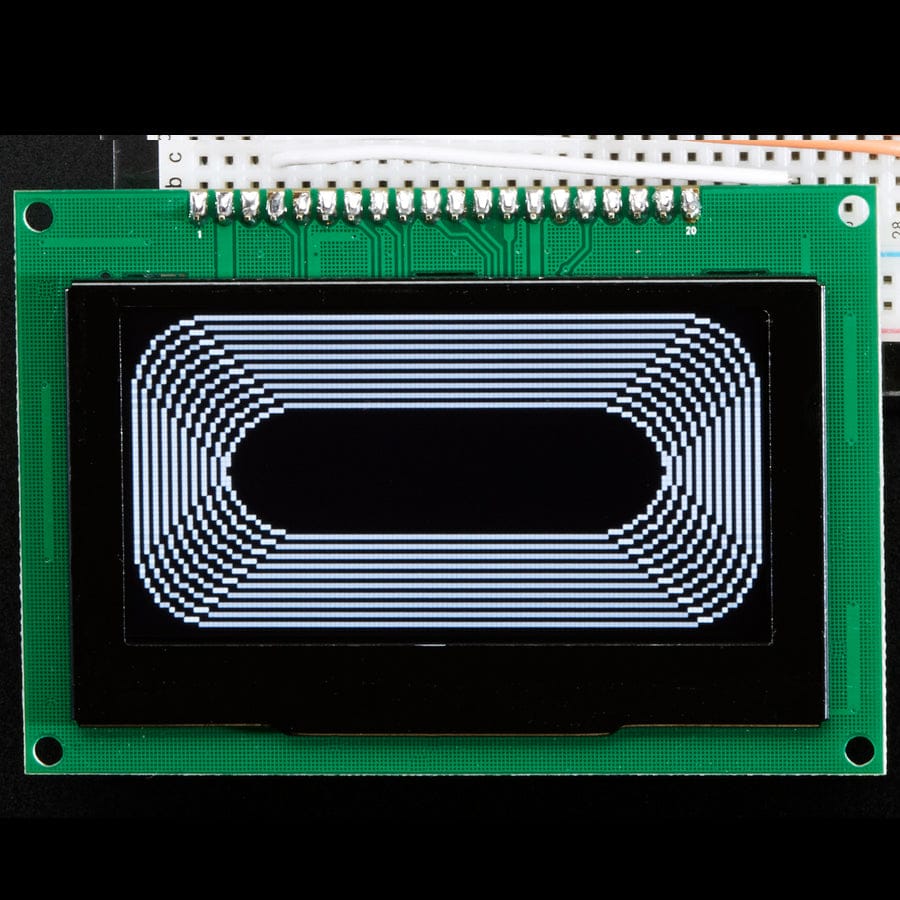
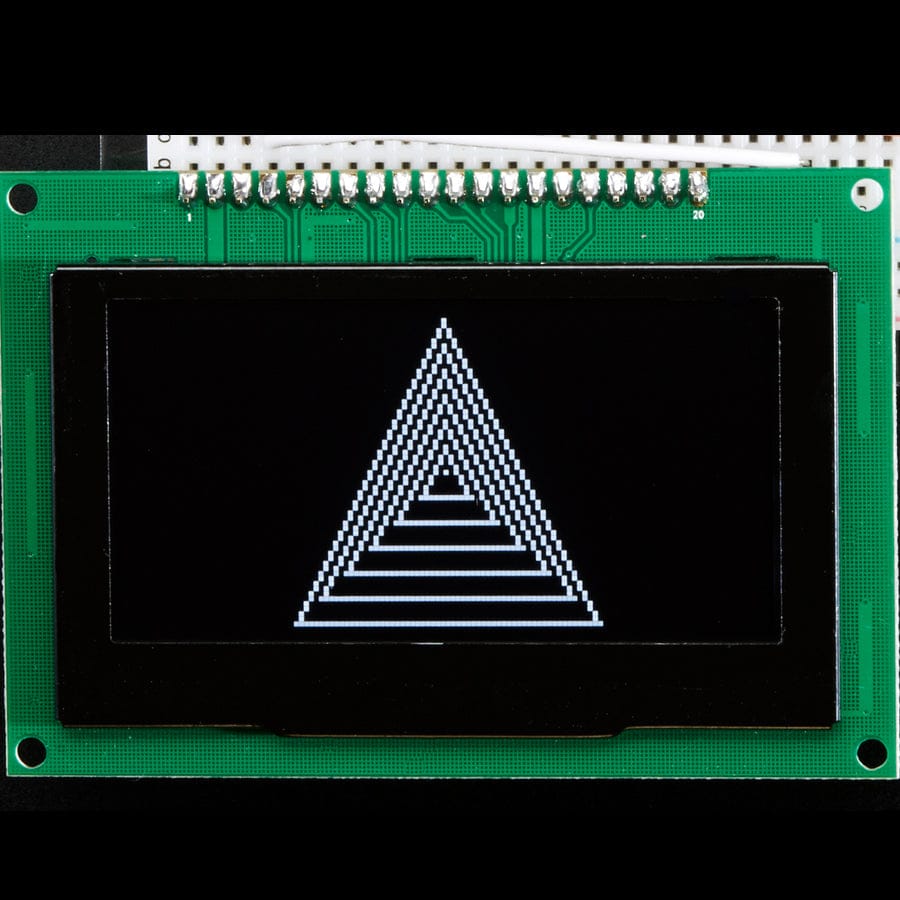
This 2.7" 128×64 white OLED is crisp, high-contrast, and needs no backlight. It uses the SSD1325 driver with 8-bit or SPI, runs at 3.3V (level shifter included), and draws ~50–150mA. Requires >1KB RAM for buffering.
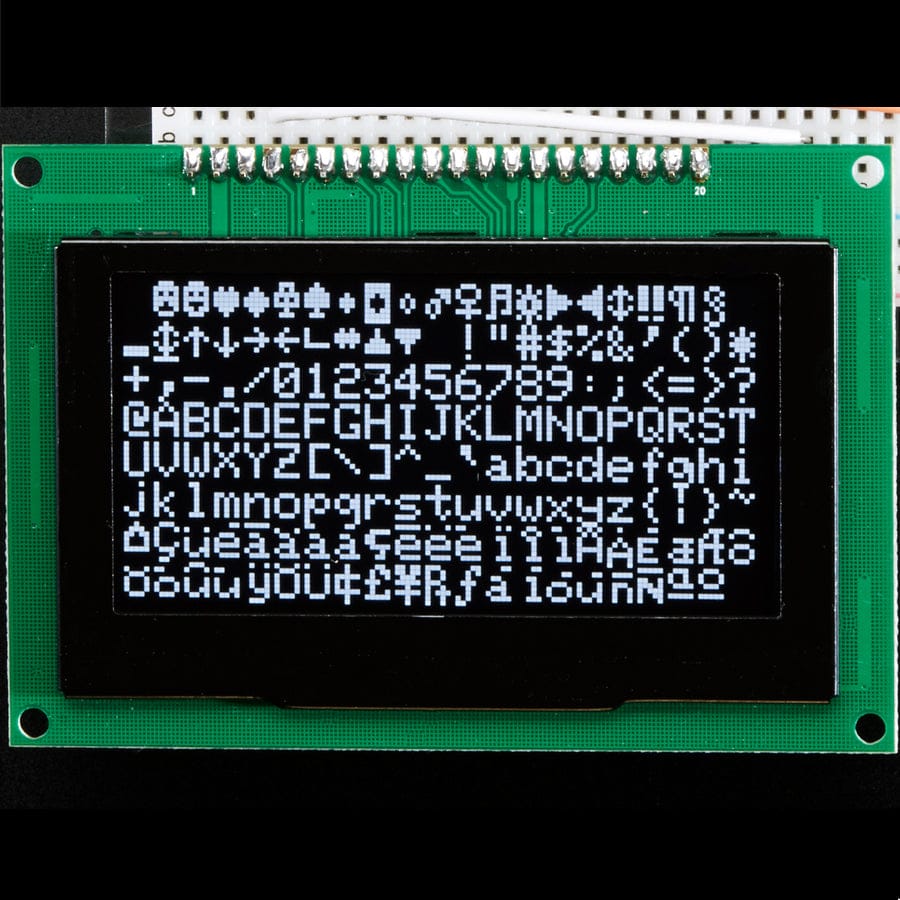
If you like monochrome OLED displays but want something larger, this 2.7" OLED is a great step up. It’s bright, crisp, and easy to read thanks to OLED’s naturally high contrast. The screen has 128 × 64 white pixels, with each pixel switched on or off by the onboard controller. Because the display produces its own light, there’s no backlight, which helps keep power use down while giving those deep blacks and sharp graphics OLEDs are known for.
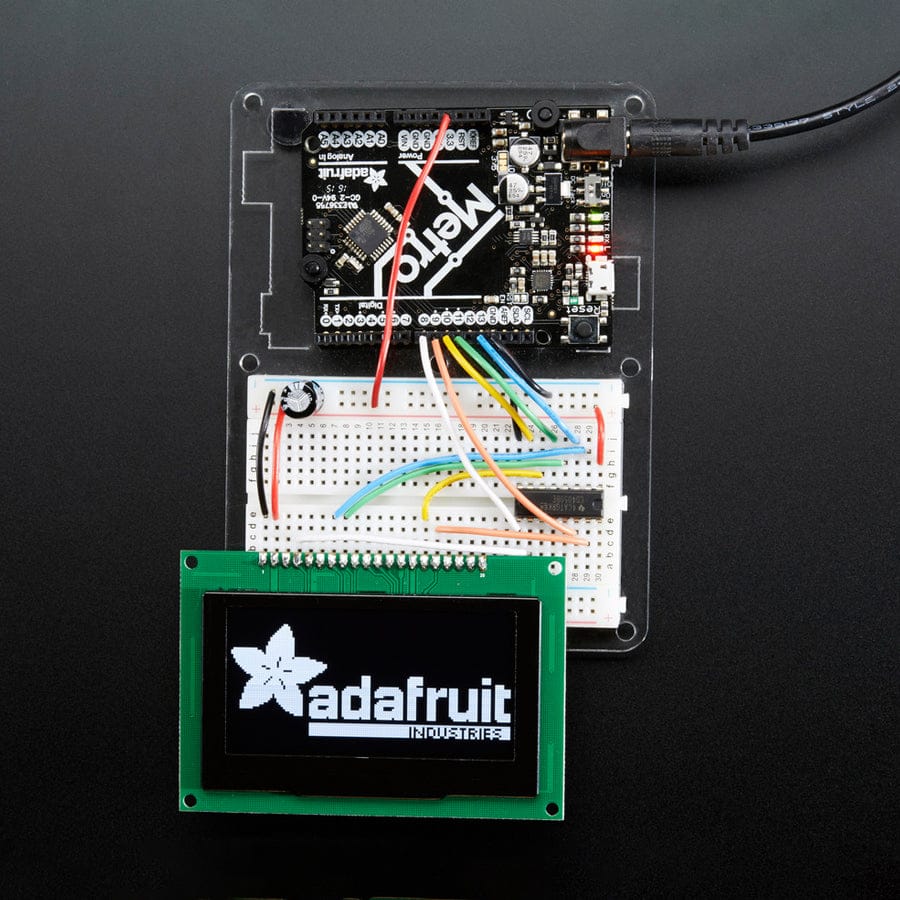
The display uses the SSD1325 driver chip, which can communicate over 8-bit or SPI. SPI is the simplest option, needing only 4 or 5 wires. The OLED itself runs on 3.3V power and expects 3.3V logic levels, but a breadboard-friendly level shifter is included so you can safely use it with 3V or 5V microcontrollers, including 5V boards like Arduino.
Power draw depends on how many pixels are lit, but it typically uses around 50–150mA from the 3.3V supply. The driver includes a built-in boost converter that steps 3.3V up to the higher voltage needed by the OLED panel. This boost converter can sometimes create a squeaking or buzzing noise, which may be reduced by adding hot glue or foam tape around the inductor, though it may not disappear completely.
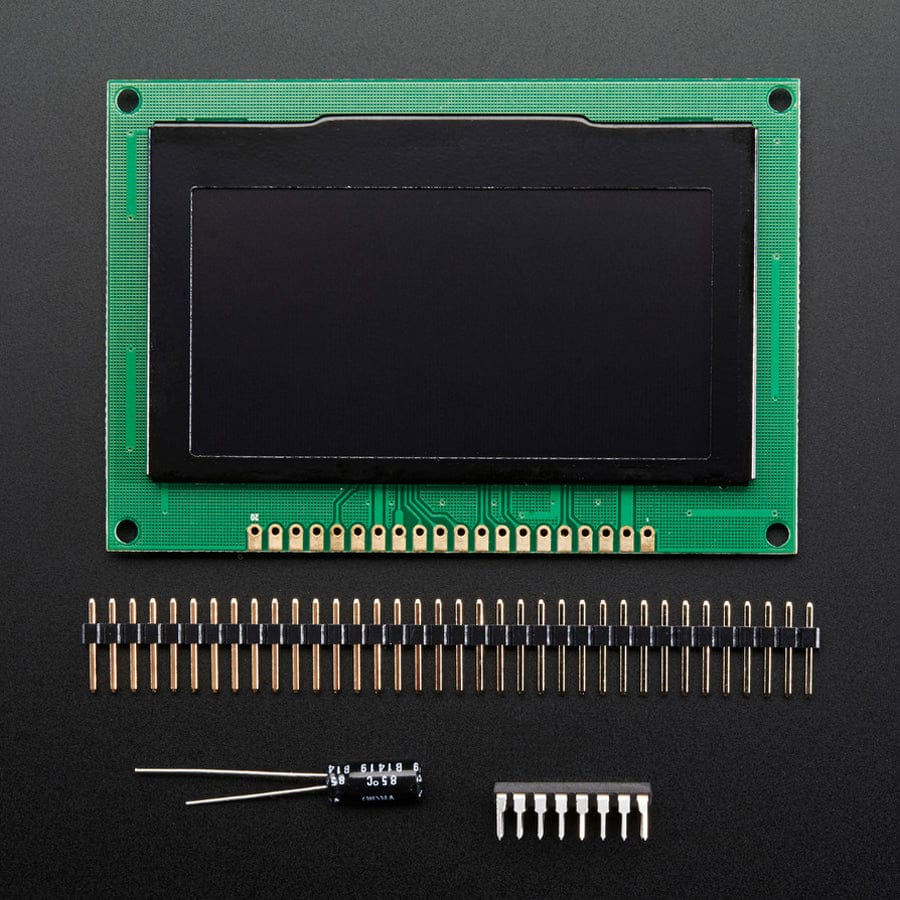
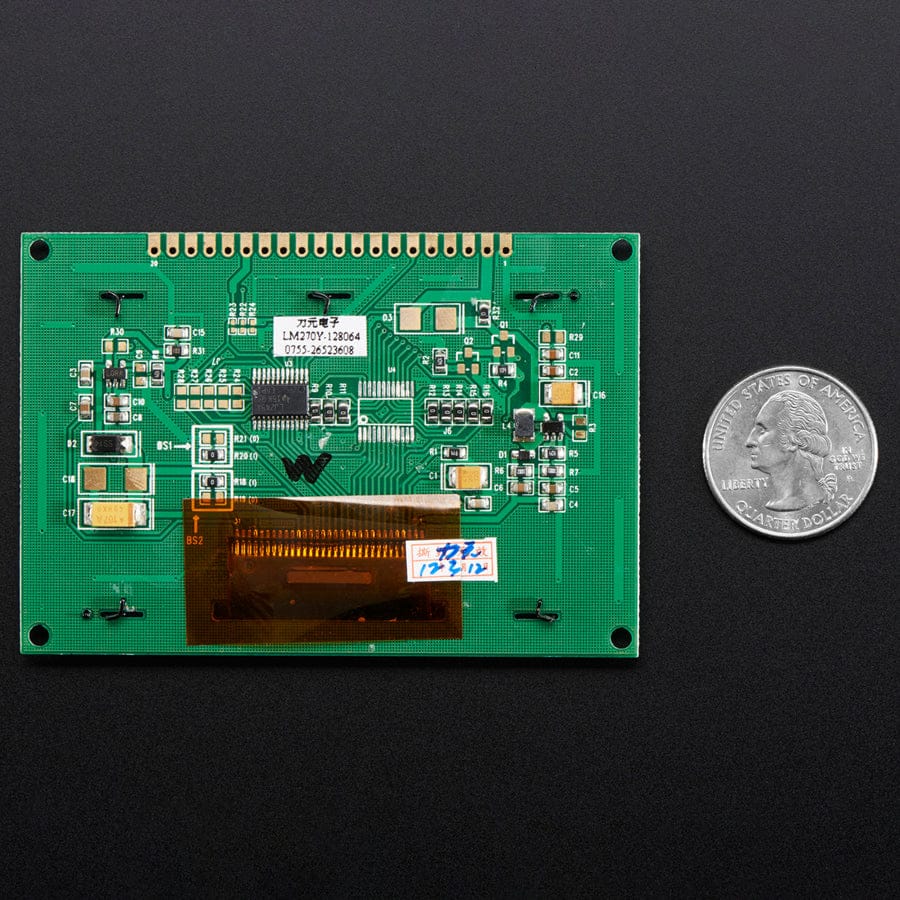
Each order includes one assembled OLED module with a bezel, plus four mounting holes for easy fitting. Since the display is 3V logic, it comes with a 74HC4050 (or compatible) level shifter, along with a 220µF capacitor — helpful because some Arduino setups may need extra capacitance on the 3.3V rail for a display this size. Headers are not pre-soldered, but a strip of header is included for you to attach. The display may arrive in 8-bit mode, and you can switch it to SPI with a small soldering change (details are covered in the tutorial).
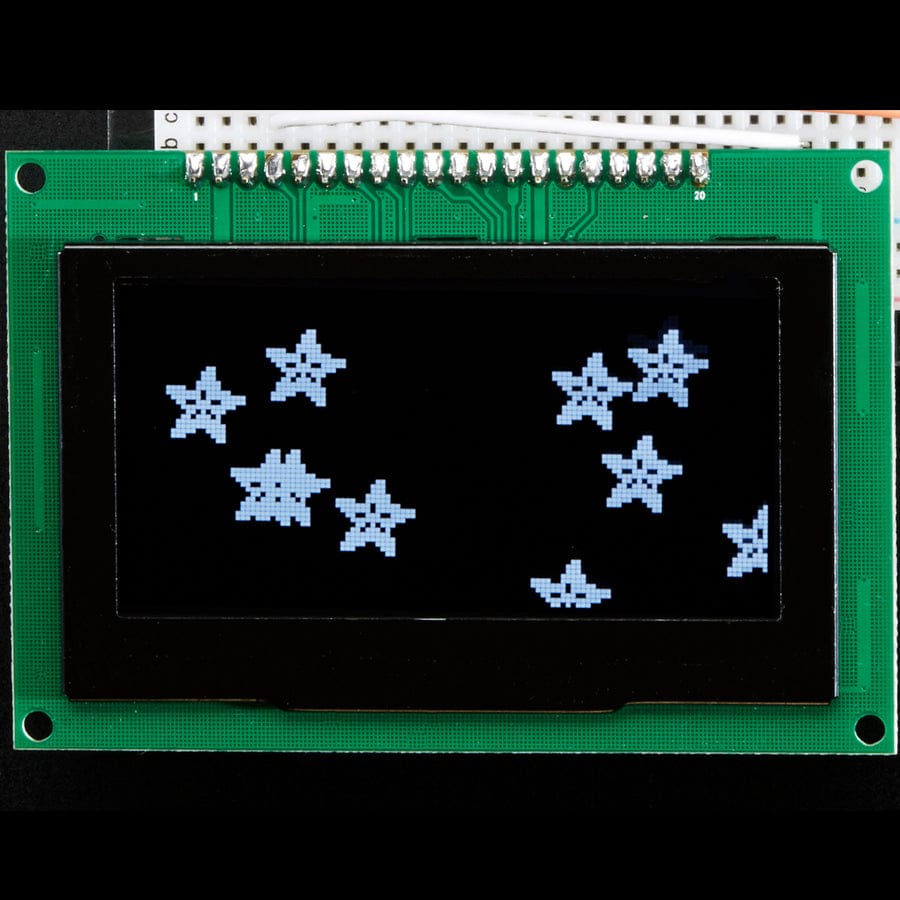
Getting started is straightforward, with a detailed guide and an Arduino library for both text and graphics. You’ll need a microcontroller with more than 1KB of RAM, since the display is fully buffered. The library supports drawing text, bitmaps, pixels, rectangles, circles, and lines, and uses 1KB of RAM to store the full screen buffer while staying fast and easy to adapt to other microcontrollers.
Please note that OLED screens are made from lots of tiny organic LEDs. If pixels are left on continuously for over 1000 hours, they can start to dim. For the most even brightness over time, it’s best to turn off the display when it isn’t needed.
Your payment information is processed securely. We do not store credit card details nor have access to your credit card information.