Adafruit AS7343 14-Channel Light / Colour Sensor Breakout
Price:
Sale price
£18.90
Stock:
Login / Signup
Cart
Your cart is empty


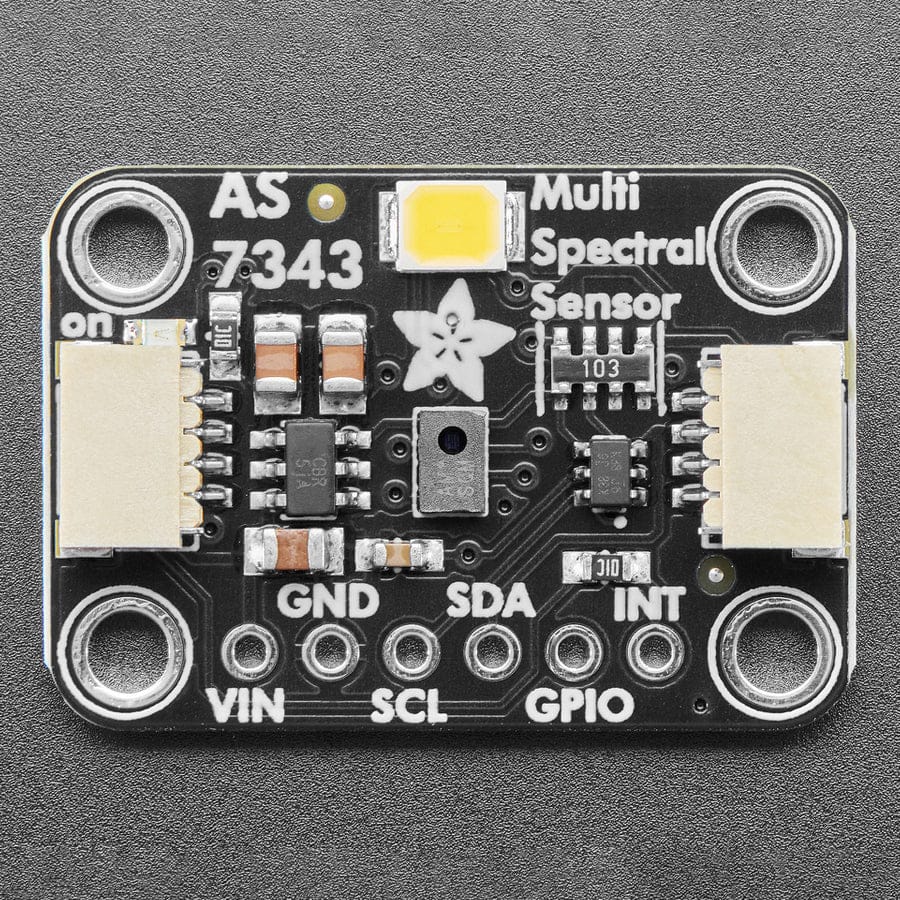
The Adafruit AS7343 Light / Colour Sensor measures 14 channels of light, giving detailed insight into colour and wavelength using a compact I2C spectrometer breakout.
The Adafruit AS7343 14-Channel Light / Colour Sensor Breakout is a compact multi-channel spectrometer that can measure not just light intensity, but the distribution of light across different wavelengths. This allows it to detect colour with far greater detail than the human eye, making it useful for analysing both emitted and reflected light.
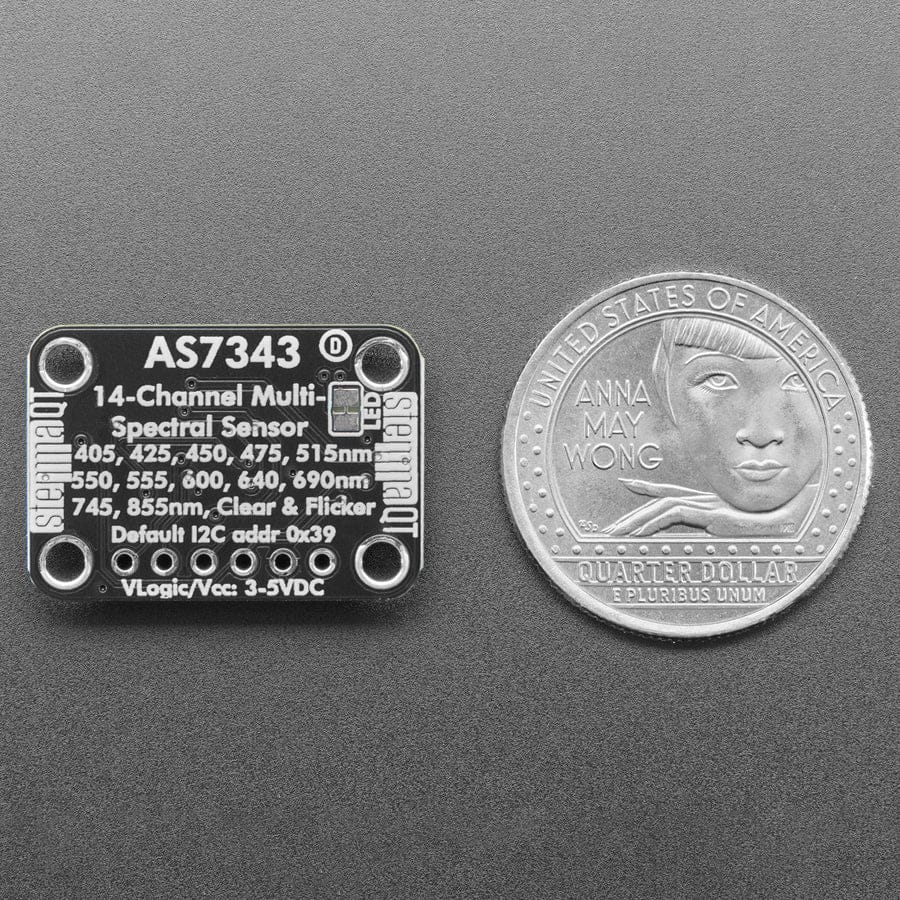
Packed into a tiny 3 × 2 mm sensor are 25 photodiodes capable of measuring 11 overlapping bands of visible light, along with near-infrared, a clear channel, and a flicker detection channel — giving 14 channels in total. Compared to the earlier AS7341, this version adds four extra light channels, although it requires updated drivers as it isn’t backwards compatible.
The AS7343 works a bit like a miniature spectroscopy sensor. Its photodiodes feed into a 16-bit, 6-channel ADC, which converts the analogue readings into digital values that can be accessed over I2C. Since there are more sensor channels than ADC inputs, the chip uses an internal multiplexer (SMUX) to route different photodiode signals to the ADC as needed. It also includes GPIO and interrupt pins for more advanced interactions with other sensors or your microcontroller.
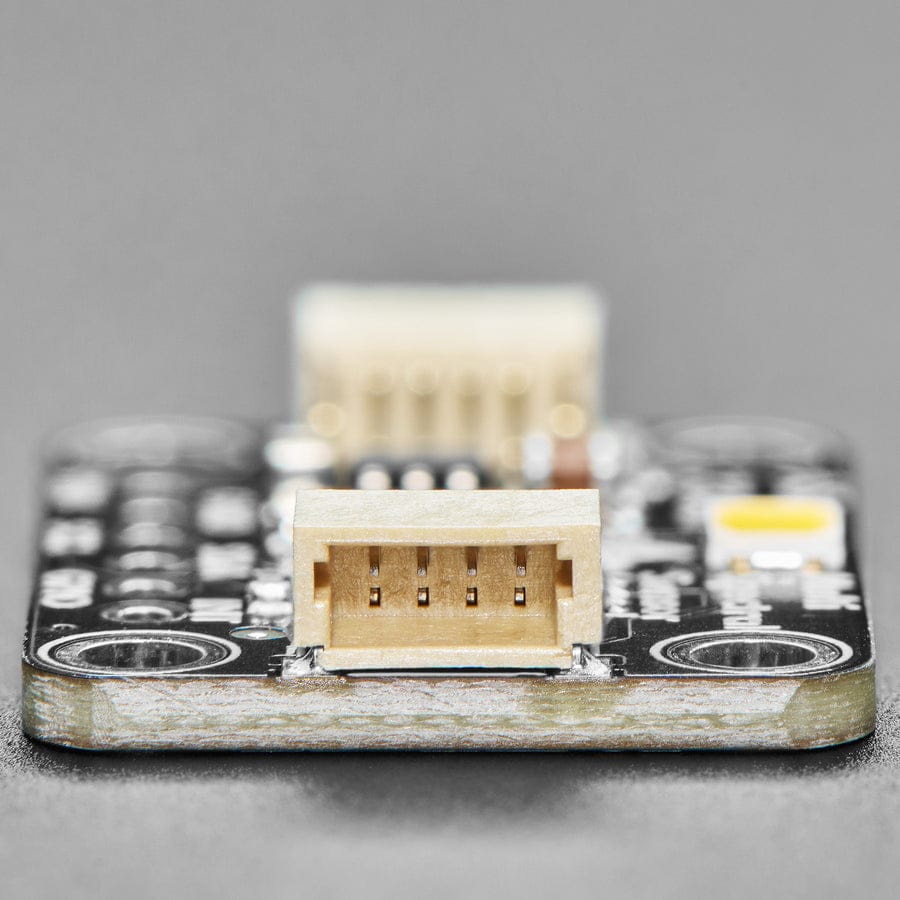
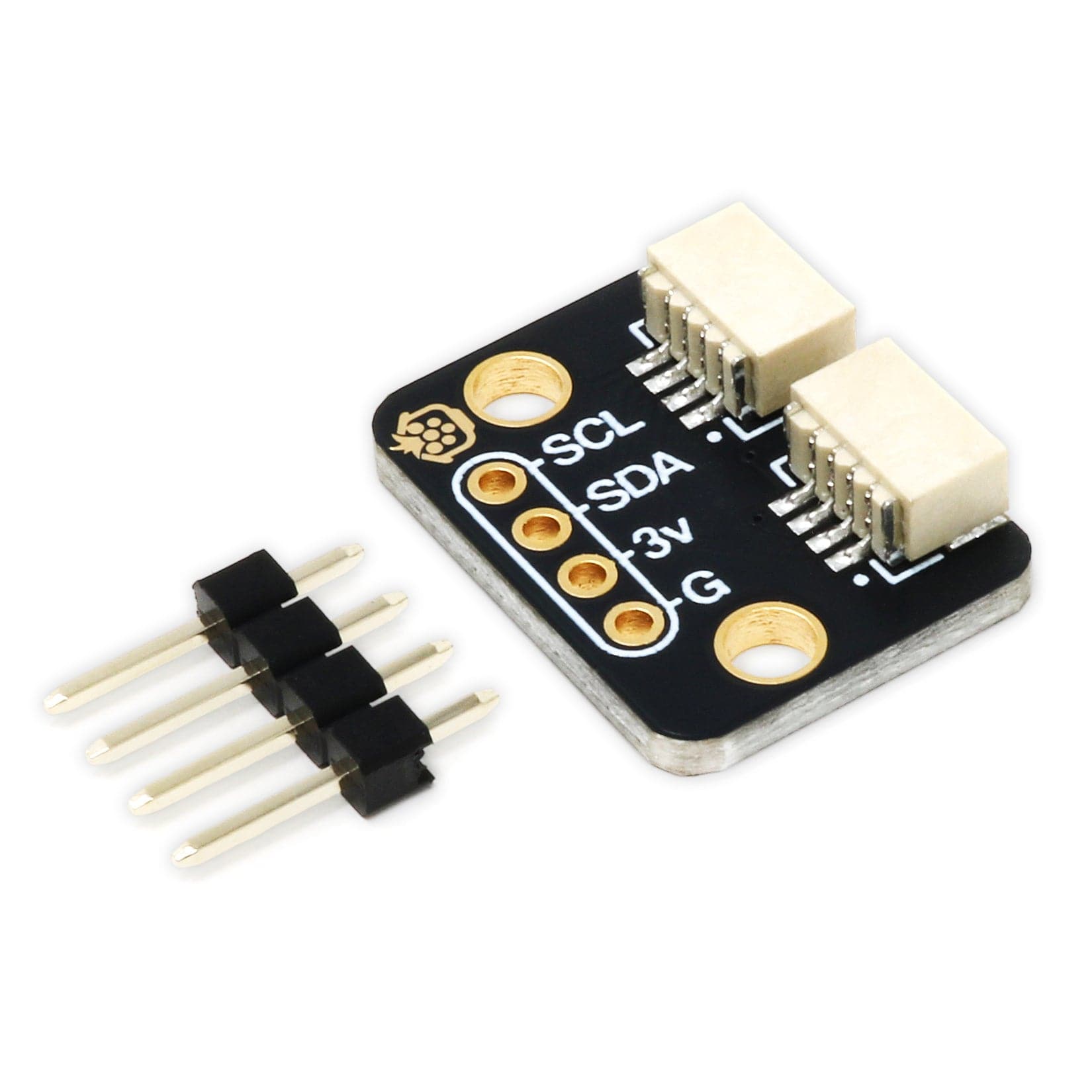
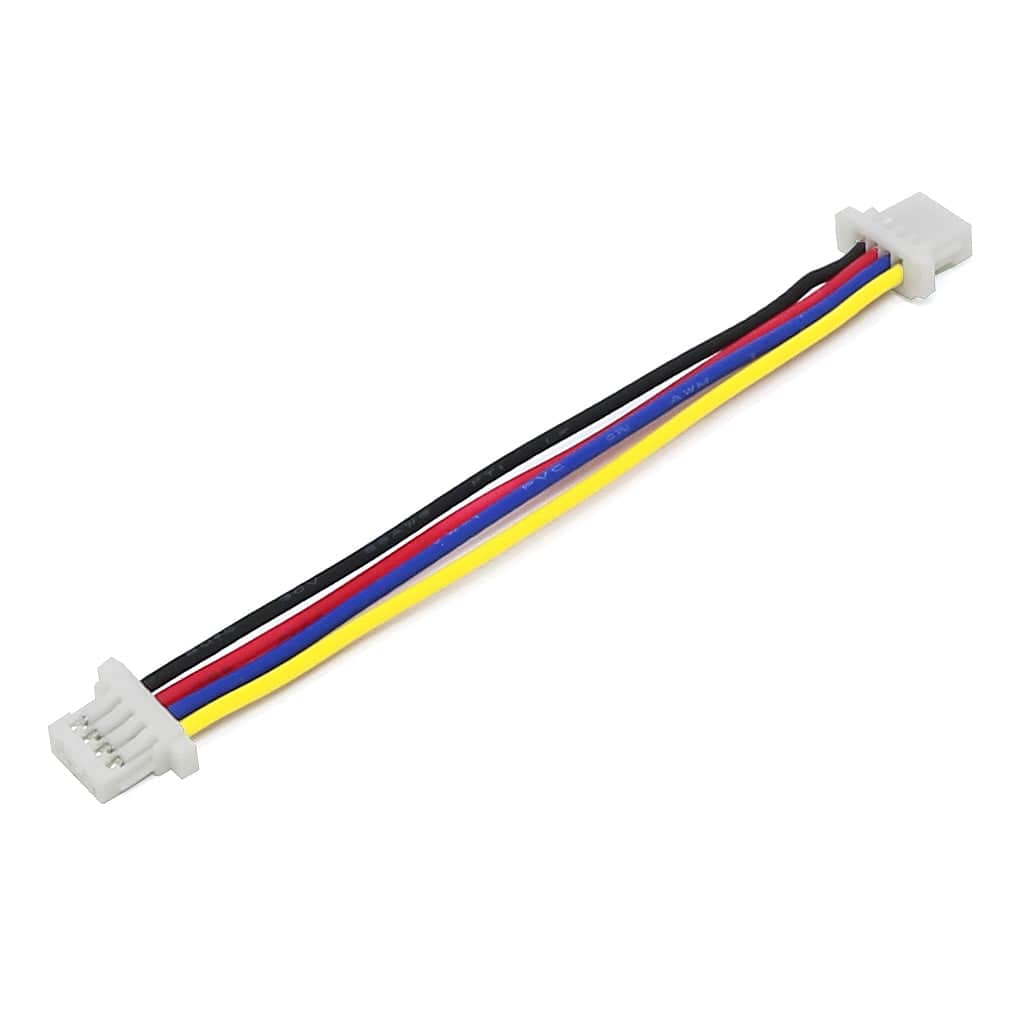
To make integration easier, the sensor is mounted on a STEMMA QT breakout board with built-in level shifting and Qwiic-compatible connectors. This allows for quick, solderless connections to a wide range of 3.3V and 5V systems, including Arduino, Raspberry Pi, and CircuitPython-compatible boards. While handling multiple light channels can be complex, the provided Arduino and CircuitPython libraries manage the setup and data handling, with example code to help you get started. The QT Cable is not included, but we offer a range of options here.
Your payment information is processed securely. We do not store credit card details nor have access to your credit card information.