
NeoPixel Ring - 12 x 5050 RGBW LEDs w/ Integrated Drivers (Cool White - 6000K)
Price:
Sale price
£9.20
Stock:
Quantity:
Login / Signup
Cart
Your cart is empty


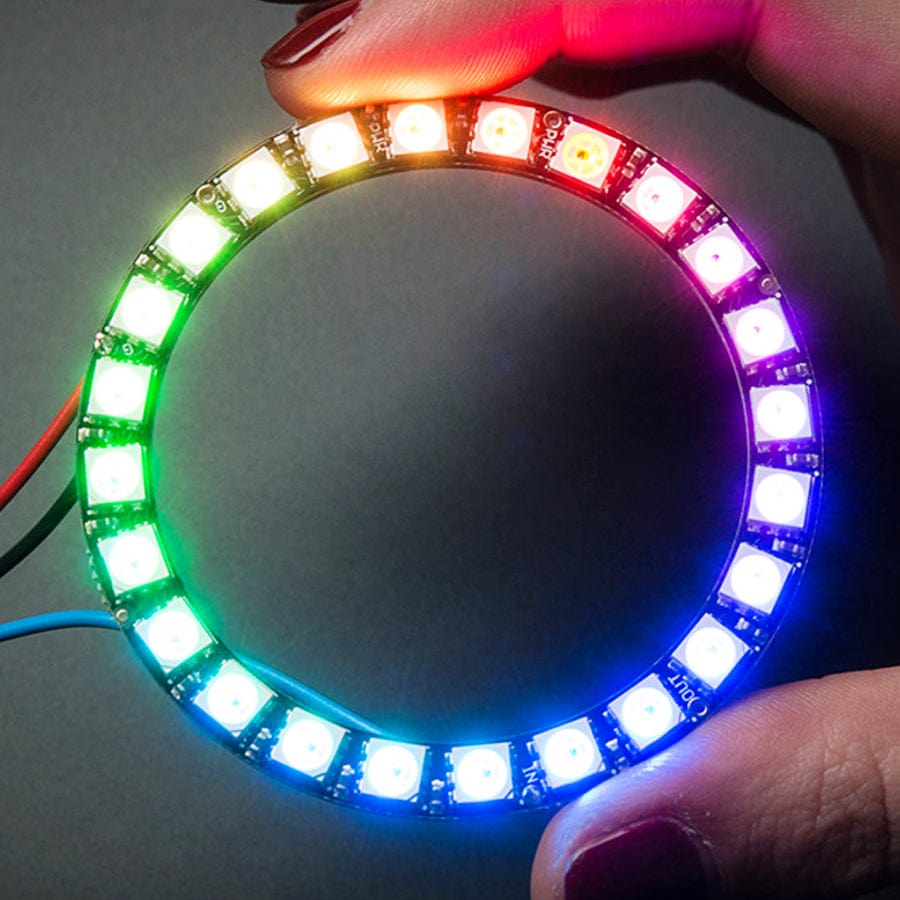
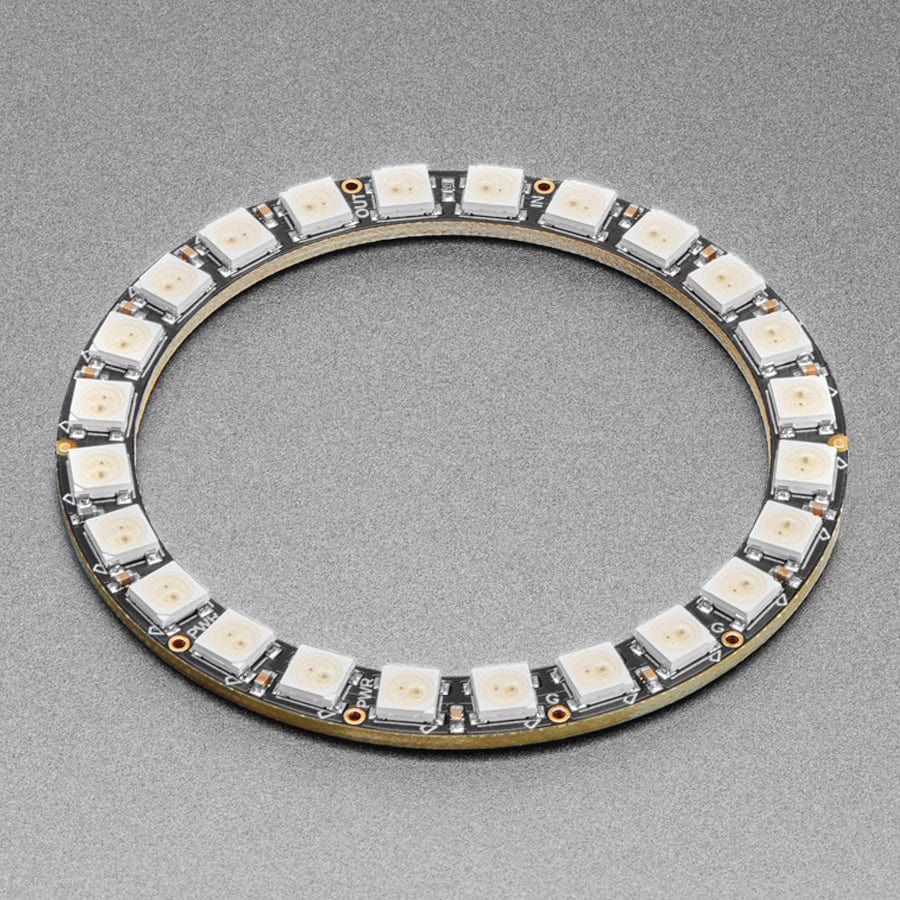
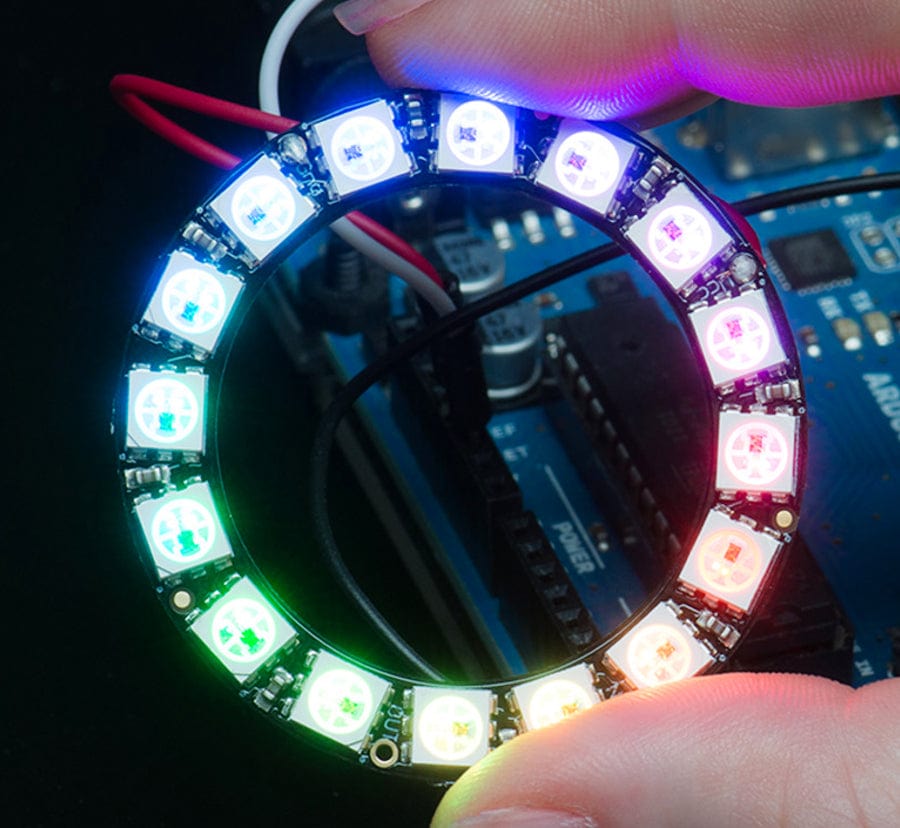
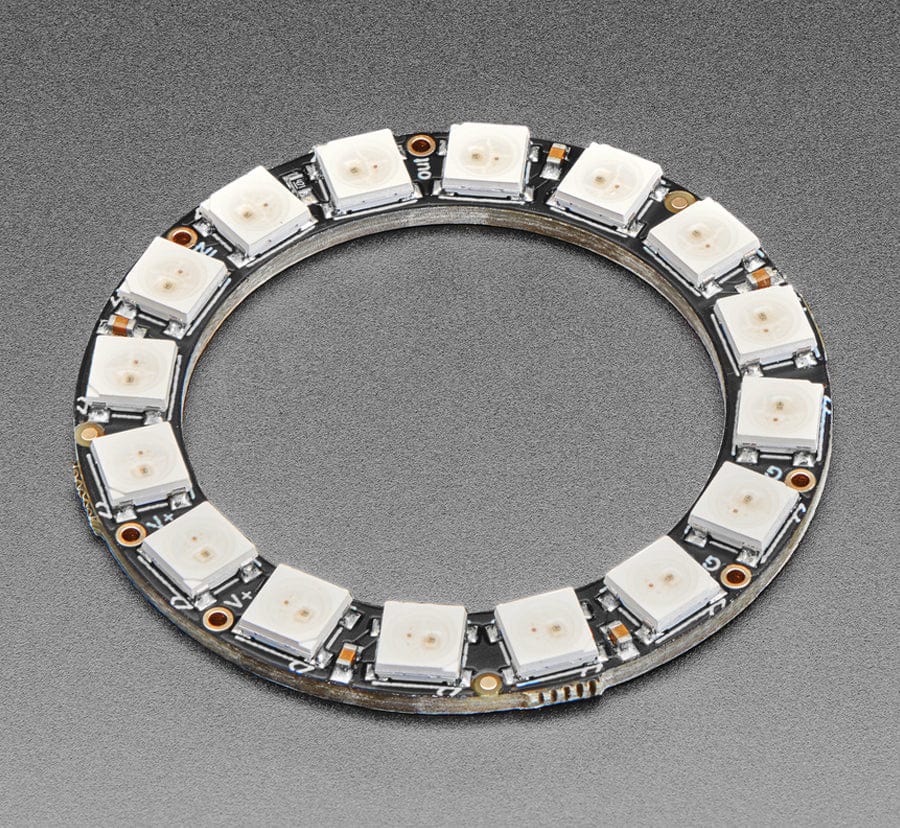
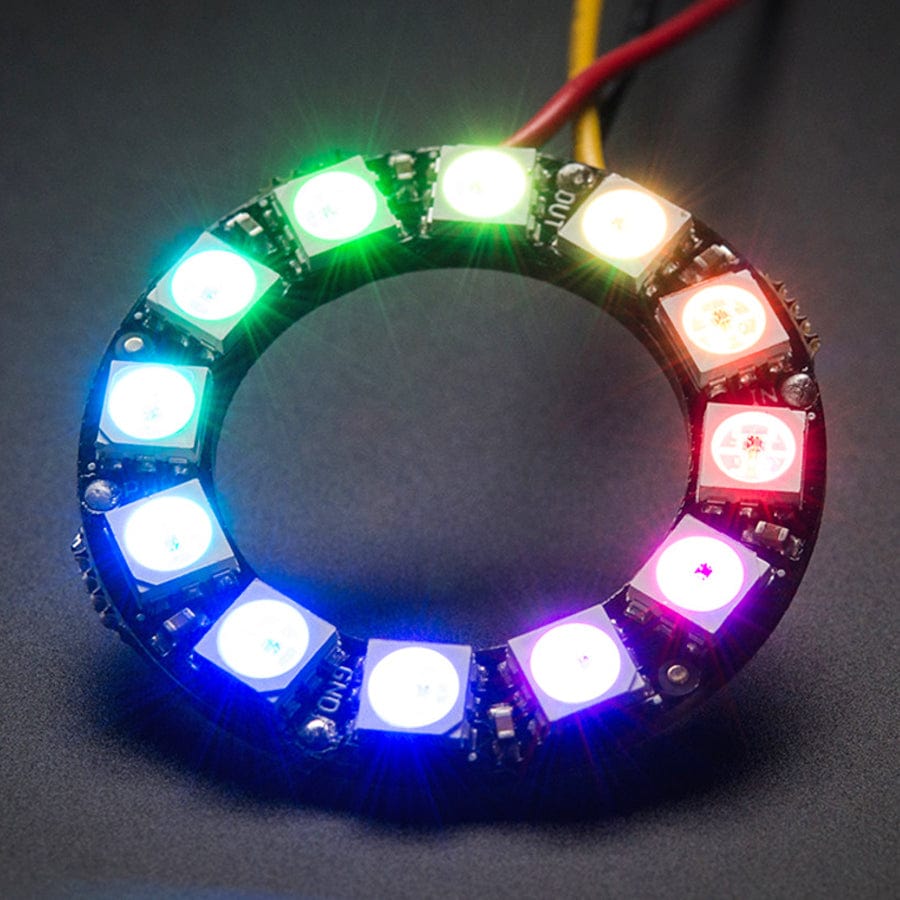
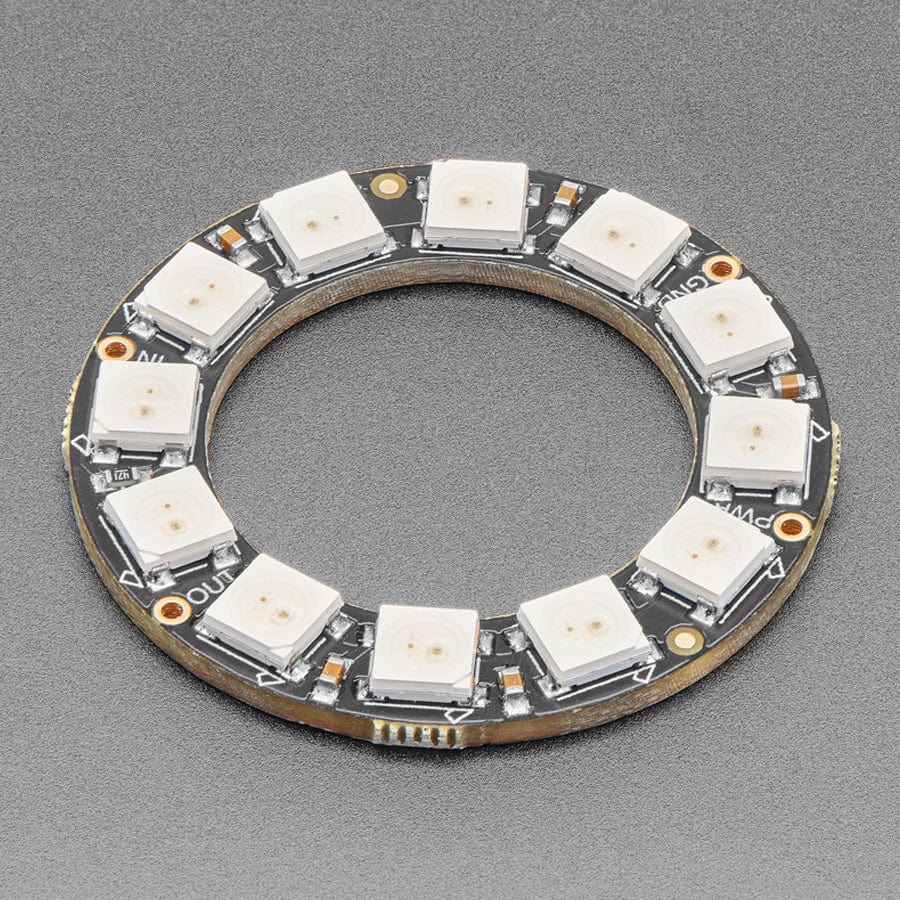
The 12 LED RGBW NeoPixel Ring – Cool White packs 12 individually addressable RGB + white LEDs into a 37mm circular board, chainable and controlled from a single pin for powerful, compact lighting projects.
What’s better than smart RGB LEDs? Smart RGB + White LEDs. This 12 LED RGBW NeoPixel Ring in Cool White adds an extra white channel to the classic NeoPixel design, giving you more flexibility for crisp whites and mixed colour effects.
This ring features 12 ultra-bright 5050 RGBW NeoPixels arranged in a circle with a 1.45" (37mm) outer diameter. Each LED contains an integrated driver chip, making every pixel individually addressable. The rings are fully chainable — simply connect the output of one ring to the input of another and control them all from a single microcontroller pin.
Each LED provides approximately 18mA constant current drive, ensuring consistent colour even if the supply voltage varies. No external choke resistors are required, keeping designs compact. Power the ring with 5V DC and you’re ready to go.
Inside each pixel, the NeoPixel is effectively split: one section handles the familiar RGB channels, while the other drives a white LED with a yellow phosphor. Unlit, it resembles an egg yolk; powered on, it delivers intense brightness. Each channel is controlled with 8-bit PWM, providing 32-bit colour per pixel (8 bits × 4 channels) for detailed lighting effects.
NeoPixels use an 800 kHz single-wire protocol, which requires precise timing. The onboard PWM refresh rate is approximately 400 Hz. If you need higher PWM frequencies for motion-heavy applications, DotStar LEDs (20 kHz PWM) may be more suitable.
Because the timing is critical, NeoPixels require a real-time microcontroller such as an AVR, Arduino, PIC, or similar. They are not suitable for Linux-based microcomputers or interpreted platforms without specialised drivers. Be sure to use a NeoPixel library with RGBW support — standard RGB-only libraries will not drive these correctly. The Adafruit NeoPixel library supports RGBW devices.
A full tutorial is available covering wiring, power calculations, and example code.
Your payment information is processed securely. We do not store credit card details nor have access to your credit card information.